
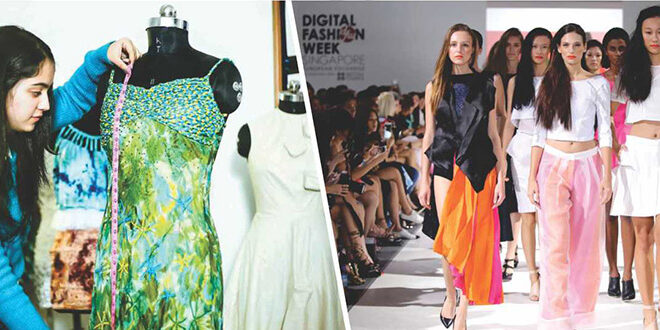
CAREER IN FASHION TECHNOLOGY ?
B.Ftech Highlights
Candidates can check the key points related to B.Ftech in the table below.
| Particulars | Details |
|---|---|
| Course Level | UG |
| Duration | 4 years |
| Course Fee | INR 40,000 – INR 2,70,000 |
| Average Salary | INR 2,00,000 – INR 4,50,000 |
| Top Recruiters | Arvind Mills, Pantaloon, Raymonds Pvt Ltd, The Shirt Company, Madura Garments, Celebrity Fashions, Fiber& Fabrics International Pvt. Ltd, Color Plus, Modern Denim, Scotts Apparels Group, Gokaldas Exports, Brandix, Bombay Rayon Fashions Ltd., RMX Joss, Gokaldas Exports, Integra Apparels, AYN Accessories (Hong Kong) |
| Job Profiles | Technical Artist, Fashion Merchandiser, Pattern Grader, Fashion Designer, Fashion Consultant, Fabric Quality Control Manager, Fashion Marketer |
B.FTech Eligibility Criteria
- Candidates are eligible if they have completed their Class 12 (in the 10+2 pattern of examination) from any recognised Central/State Board of Secondary Examination with passing marks.
- Apart from this, colleges also specify that in order to pursue a B.FTech course aspirants should have studied subjects like Physics, Chemistry and Mathematics at their 10+2 level.
- Further, candidates who have pursued a three or four years diploma programme in any branch of Engineering which is recognised by AICTE or a State Board of Technical Education are also eligible to apply for a B.FTech course.
B.Ftech Entrance Exams
The National Institute of Fashion Technology, a leading institution in the field of fashion training, administers the national-level NIFT Entrance Exam as the basis for admission to the majority of Bachelor in Fashion Technology (B.F.Tech) programmes across the nation.
| Name of the entrance examination | Description |
|---|---|
| NIFT – GAT | For those seeking admission to its BFTech programmes, NIFT administers the GAT, or General Ability Test. The test, which gauges candidates’ aptitude, is written. |
B.Ftech Skills Required
B.FTech as a course requires aspirants to be creative and also possess the required technical skills. In order to pursue a course as well as make a future in the field of fashion technology candidates need to possess the below-mentioned skill-set:
Creativity and artistic taste | Knowledge of equipment |
Good planning skills | Good marketing skills |
Good observation | Goal oriented |
Good communication skills | Innovativeness |
Good at sketching | Visual imagination |
Knowledge of market requirements |
B.FTech Syllabus
The topics/ subjects taught as part of a B.FTech course vary from one college to the other. However, some common topics that candidates are taught as part of a B.FTech course are listed below:
BFTech Course Curriculum | |
|---|---|
Fundamentals of Fashion Design | History of Costumes |
Principles and Elements of Design | Fundamentals of Computers |
Fashion Communication | Fundamentals of Textile Fibers and Yarns |
Introducing Pattern Making and Stitching | Fashion Illustration |
Pattern Making through Drafting and Flat Pattern Techniques | Garment Construction |
Customer Relations Management | Surface Ornamentation |
Import and Export | Financial and Management Accounting |
Concept of e-Commerce | Quality Control |
Pattern Making/ Cutting | Fashion Design and Illustration |
Apparel and Fashion Merchandising | Total Quality Control |
Fashion Merchandising | Computer-Aided Designing: Apparel Industry |
Fashion Marketing and Advertising | Environmental Studies |
Entrepreneurship Development | Apparel Production Process |
Production Management | Industrial Pattern Making and Sewing |
Pattern Grading | Advanced Fashion Illustration |
Graphic Design | Accessory Design |
Fashion Merchandising | Retail Merchandising and Management |
Career in B.Ftech
Since BFTech is a combination of a fashion as well as technical course, thus, aspirants can opt to make a career in the Fashion industry or in the Fashion Technology field. Some job profiles that aspirants can pursue after completing a B.FTech course are mentioned below:
- Technical Artist: In this job profile one is responsible for deciding how a garment should be stitched and thereafter determine how the end product should be made. A Technical Artist or Designer is responsible for creating a technical package. Thus, a Technical Artist needs to mention sewing details, wash description, points of measurement (or POM), label/ hangtag placement as well as packaging instructions.
- Fashion Merchandiser: In such a job profile one oversees the design as well as the aesthetic quality of the store. Fashion Merchandisers perform tasks like working on the store layout, creating displays and stocking merchandise in such a way that it leads to the promotion of sales. A Fashion Merchandiser ensures that the physical appearance of the store represents the company’s brand, creates a good customer experience and supports current marketplace trends.
- Pattern Grader: In this job profile one works on a computer wherein he/ she lays out a pattern on a digitising table and tracks its outline with scanning equipment or a light pen. Thereafter, a pattern grader plots measurements at key points and feeds it into the computer. By doing this Pattern Grader adjust the size and proportion of the pattern. After this, the Pattern Grader does the necessary quality checks and makes sure that the pattern being produced matches the original one.
- Fashion Designer: In such a job profile one can either start their own label or join a firm to design clothes for them. A Fashion Designer works on designing different types of clothes such as jackets, jeans, women’s wear, men’s wear, children’s wear, evening wear, knitwear, sportswear, and the like.
- Fashion Consultant: In such a job profile one helps their clients to develop a wardrobe that promotes their public image. People working in this profession advise others on the latest fashion trends, clothing styles, colours to wear/ avoid and how to do their make-up and hair.
- Fabric Quality Control Manager: In such a job profile one is tasked with the job of determining, negotiating as well as agreeing on in-house quality procedures, standards as well as specifications for the use and production of different fabrics.
- Fashion Marketer: In this job, profile candidates can work for clothing companies, boutiques or outlet chains. As fashion marketers aspirants need to work towards publicising and increasing awareness of a particular brand, designer labels or department stores. So, basically if one chooses such a professional field then they are expected to plan, direct or coordinate marketing policies and programmes, such as determining the demand for products and services offered by a firm and its competitors and identifying potential customers.
Top Recruiters in B.Ftech
After completing a B.FTech course aspirants can consider joining the following industries-
- Arvind Mills
- Pantaloon
- Raymonds Pvt Ltd
- The Shirt Company
- Madura Garments
- Celebrity Fashions
- Fibre & Fabrics International Pvt. Ltd
- Color Plus
- Modern Denim
- Scotts Apparels Group
- Gokaldas Exports
- Brandix
- Bombay Rayon Fashions Ltd.
- RMX Joss
- Gokaldas Exports
- Integra Apparels
- AYN Accessories (Hong Kong)
FAQs Related to B.Ftech
Q. What is the difference between Fashion Design and Fashion Technology?
Q. What are the eligibility criteria for B.Ftech?
Q. What is the required skillset for the B.Ftech course?
Q. Does the course curriculum for B.Ftech remain the same?
Q. What are the job profiles that a B.Ftech graduate can go for?
Q. Which are the top recruiters of B.ftech graduates?
Q. How long does a bachelor’s degree in fashion technology last?
Q. I’ve completed a three-year engineering diploma programme. Can I register for this course?
Q. What are some of the admission exams for the bachelor’s programme in fashion technology?
Q. Are there any bachelor’s degrees in fashion technology offered through distance learning?
Q. What are some examples of the typical course costs for a bachelor’s degree in fashion technology?
Required Skillset for BFTech
BFTech as a course requires aspirants to be creative and also possess the required technical skills. In order to pursue a course as well as make a future in the field of fashion technology candidates need to possess the below mentioned skill-set:
Creativity and artistic taste | Knowledge of equipment |
Good planning skills | Good marketing skills |
Good observation | Goal oriented |
Good communication skills | Innovativeness |
Good at sketching | Visual imagination |
Knowledge of market requirements | Eye for detail |
Course Curriculum for BFTech
The topics/ subjects taught as part of a BFTech course vary from one college to the other. However, some common topics that candidates are taught as part of a BFTech course are listed below:
BFTech Course Curriculum | |
|---|---|
Fundamentals of Fashion Design | History of Costumes |
Principles and Elements of Design | Fundamentals of Computers |
Fashion Communication | Fundamentals of Textile Fibers and Yarns |
Introducing to Pattern Making and Stitching | Fashion Illustration |
Pattern Making through Drafting and Flat Pattern Techniques | Garment Construction |
Customer Relations Management | Surface Ornamentation |
Import and Export | Financial and Management Accounting |
Concept of e-Commerce | Quality Control |
Pattern Making/ Cutting | Fashion Design and Illustration |
Apparel and Fashion Merchandising | Total Quality Control |
Fashion Merchandising | Computer Aided Designing: Apparel Industry |
Fashion Marketing and Advertising | Environmental Studies |
Entrepreneurship Development | Apparel Production Process |
Production Management | Industrial Pattern Making and Sewing |
Pattern Grading | Advanced Fashion Illustration |
Graphic Design | Accessory Design |
Fashion Merchandising | Retail Merchandising and Management |
BFTech Job Profiles & Recruiters
Since BFTech is combination of a fashion as well as technical course, thus, aspirants can opt to make a career in the Fashion industry or in the Fashion Technology field. Some job profiles that aspirants can pursue after completing a BFTech course are mentioned below:
- Technical Artist: In this job profile one is responsible for deciding how a garment should be stitched and thereafter determine how the end product should be made. A Technical Artist or Designer is responsible for creating a technical package. Thus, a Technical Artist needs to mention sewing details, wash description, points of measurement (or POM), label/ hangtag placement as well as packaging instructions.
- Fashion Merchandiser: In such a job profile one oversees the design as well as aesthetic quality of the store. Fashion Merchandisers perform tasks like working on the store layout, creating displays and stocking merchandise in such a way that it leads to promotion of sales. A Fashion Merchandiser ensures that the physical appearance of the store represents the company’s brand, creates a good customer experience and supports current marketplace trends.
- Pattern Grader: In this job profile one works on a computer wherein he/ she lays out a pattern on a digitising table and tracks its outline with a scanning equipment or a light pen. Thereafter, a pattern grader plots measurements at key points and feeds it into the computer. By doing this Pattern Grader’s adjust the size and proportion of the pattern. After this the Pattern Grader does the necessary quality checks and makes sure that the pattern being produced matches with the original one.
- Fashion Designer: In such a job profile one can either start their own label or join a firm to design clothes for them. A Fashion Designer works on designing different types of clothes such as jackets, jeans, women’s wear, men’s wear, children’s wear, evening wear, knitwear, sportswear, and the likes.
- Fashion Consultant: In such a job profile one helps their clients to develop a wardrobe that promotes their public image. People working in this profession advise others on the latest fashion trends, clothing styles, colours to wear/ avoid and how to do their make-up and hair.
- Fabric Quality Control Manager: In such a job profile one is tasked with the job of determining, negotiating as well as agreeing on in-house quality procedures, standards as well as specifications for the use and production of different fabrics.
- Fashion Marketer: In this job profile candidates can work for clothing companies, boutiques or outlet chains. As a fashion marketer aspirants need to work towards publicising and increasing awareness of a particular brand, designer labels or department stores. So, basically if one chooses such a professional field then they are expected to plan, direct or coordinate marketing policies and programmes, such as determining the demand for products and services offered by a firm and its competitors, and identify potential customers.
After completing a BFTech course aspirants can consider joining an Export House, Fashion House, Production Units, Textile Mill, Garment Manufacturing Unit, Leather Company and the likes