

A Career in Journalism (Courses)
In journalism, journalists who represented reporters and columnists have to take a bachelor’s degree in communications or journalism. In journalism, you have progression in editing, reporting, feature writing, photojournalism and communications. Supplementary coursework is committed by whether a student-focused on print or broadcast journalism. Some are concentrating on online media like web design skills and also how to combine text with graphics, photo and video media.
While completing your degree, you have decided in which field you want to career either print or broadcast journalism. Here is some of the Journalism course one may opt for for a career in Journalism in India.
| S.No | Courses | Duration |
| 1. | BA in Journalism | 3 Years of the undergraduate degree program |
| 2. | BA in Journalism and Mass Communication | 3 Years of the undergraduate degree program |
| 3. | Bachelor of Journalism | 3 Years of the undergraduate degree program |
| 4. | Bachelor of Mass Media and Journalism | 3 Years of the undergraduate degree program |
| 5. | Bachelor of Communication and Journalism | 3 years of the undergraduate degree program |
| 6. | B.Sc. in Journalism and Mass Communication | 3 years of the undergraduate degree program |
| 7. | BA in Media and Communication | 3 years of the undergraduate degree program |
| 8. | BA in Media Studies | 3 Years undergraduate degree program |
| 9. | BA in Mass Communication | 3 Years undergraduate degree program |
| 10. | Bachelor of Mass Media | 3 years of the undergraduate degree program |
| 11. | BBA in Mass Communication and Journalism | 3 years of the undergraduate degree program |
| 12. | Diploma in Journalism | 1 Year-long Diploma program |
Scopes & Career Options
In journalism, you have needed a bachelor’s degree in journalism or communication. If you want to go in journalism you have to need a degree in print journalism or if want to choose a field of communication you need a degree in broadcast journalism. In journalism you need work experience, for the experience, you do intern from a media outlet, which is important to getting you secure a job in this field, In the present time which has become more competitive. For making a career in journalism we need work experience.
For making a career in journalism with smaller productivity and telecast networks, usually as general task reporters assigned to the news that is relevant to that outlet’s audience. After getting experience in reporting, many journalists go on to become editors, producers, supervising reporters and even station managers and publishers. Here are some of the career options for a journalist.
- Editor.
- Cartoonist.
- Photo Journalist.
- Proof Reader.
- Feature Writer.
- Leader Writer.
- Correspondent/Special Reporter.
- Critic.
- Presenters.
- Researchers.
- Reporter.
- Broadcast Reporters.
- Columnist.
Salary in Journalism
In journalism, a journalist minimum salary of Rs 200000 to Rs 500000 per year. In this job, people are not experienced in more than 20 years. In India, a starter may get Rs 10,000 to Rs 20,000 and it will go on increasing with years like 30k, 40k, 50k, etc. Senior reporter after 10-12 years it may get 1-2 lakh salary or chief editor may get 5lakh or more than. But in journalism, the thing is, even if you study in the best University and your score may be in the 90s and your experience is 0 you can earn maybe 6,000 to 10,000 per month. We say that experience is more important than a percentage. Marks don’t matter in journalism if your experience is null. Journalism is good for more interactive or experienced people.
Average Annual Salary in United States
| Job Title | Entry-Level (0-12 months) | Early Career (1-4 Years) | Midcareer (5-9 Years) | Experienced (10-19 Years) |
|---|---|---|---|---|
| Journalist | $32,460 | $39,650 | $44,350 | $51,520 |
| Reporter | $32,660 | $40,580 | $53,700 | $61,450 |
| Editor | $38,980 | $47,860 | $55,270 | $59,860 |
| Public Relations Manager | $44,520 | $56,590 | $71,040 | $78,270 |
Top Universities for Journalism in India
In India, there are so many institutes in India. Student always wants to get admission into the top university in India. Following are the top ten universities in India are;
- IIMC (Indian Institute of Mass communication) Delhi
- XIC (Xavier’s Institute of Communication)
- ACJ (Asian College of Journalism)
- SIMC (Symbiosis Institute of Mass Communication)
- AJKMCRC (AJ Kidwai Mass Communication Research Centre)
- MICA (Mudra Institute of Communications, Ahmedabad)
- IIJNM (Indian Institute of Journalism and New Media, Bangalore)
- Department of Journalism and Mass Communication, BHU
- Department of Communication and Journalism, Pune
- Bharati Vidya Bhavan’s Sardar Patel College of Communication and Management, Delhi
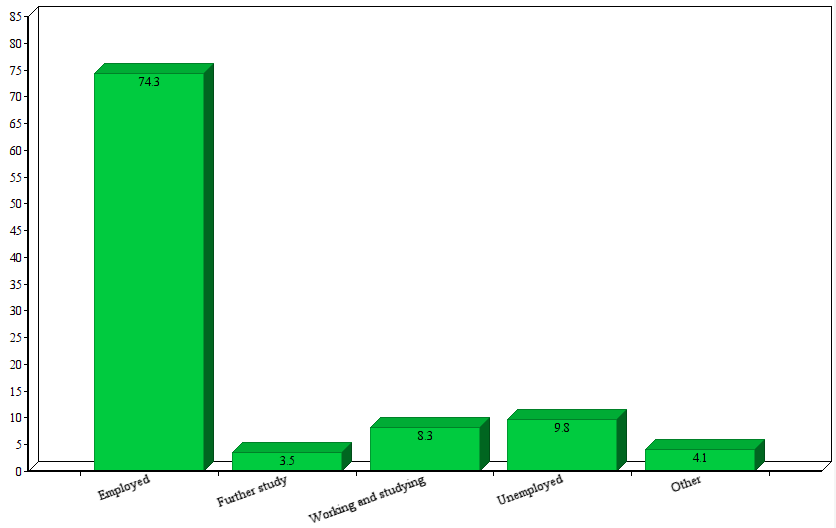
What do journalism graduates do?
| Destination | Percentage |
|---|---|
| Employed | 74.3 |
| Further study | 3.5 |
| Working and studying | 8.3 |
| Unemployed | 9.8 |
| Other | 4.1 |
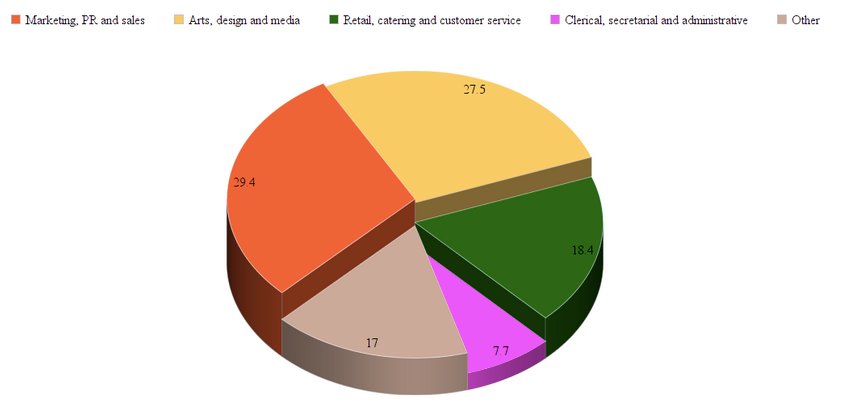
What Types of Job Journalism Student Doing
| Work Nature | Percentage |
|---|---|
| Marketing, PR and sales | 29.4 |
| Arts, design and media | 27.5 |
| Retail, catering and customer service | 18.4 |
| Clerical, secretarial and administrative | 7.7 |
| Other | 17 |
Diploma and PG Diploma in Journalism Courses After 12th
Diploma and PG Diploma courses may vary from each other in terms of the eligibility criteria and even the knowledge that each of them provides. A Diploma in journalism provides students with advanced professional training to write for magazines, newspapers, and broadcast news on television, radio, etc. Whereas, a PG Diploma in Journalism further works on enhancing the skills of the students in major sectors of journalism like newspaper reporting, broadcasting of news, etc and can be pursued only after pursuing graduation in Journalism or Mass Communication.
- Diploma courses provide the students with specific knowledge about the subject which would be enough for them to excel in that field compared to elaborated knowledge provided in full-time bachelor’s or master’s degree courses. This makes the Diploma courses both time-saving as well as cost-saving.
- While a Diploma in Journalism could be for 2 years, PG Diploma in Journalism can be for 1 year only.
- Diploma courses are mostly preferred by students who aspire to indulge themselves in the employment sector soon after completion of their studies rather than going for a detailed education which is proven to be time-consuming.
- Currently, the diploma graduates of Journalism are eligible enough to earn themselves an average initial salary of INR 2-10 LPA which may further increase with an increase in expertise and experience.
Top Diploma Journalism Courses After 12th
Some of the most popular courses available for a Diploma in Journalism field have been listed below for reference:
| Name of the Course | Colleges offering the course | Average Course Fee |
|---|---|---|
| Diploma in Journalism | IIMC, Delhi St. Xaviers College Amity School of Communication ITM University, Gwalior | INR 10,000 – INR 5,00,000 |
| Diploma in Journalism and Mass Communication | Xavier Institute of Communications, Mumbai Amity University, Noida Mahatma Gandhi University, Meghalaya AAFT School of Mass Communication, Uttar Pradesh | INR 14,000 – INR 80,000 |
Top PG Diploma Journalism Courses After 12th
PG Diploma Journalism courses can be pursued only if the students hold graduation or an equivalent degree from any recognized institute in the field of Journalism or Mass Communication. Below listed are some of the most popular PG Diploma courses for Journalism which are often chosen by students.
| Name of the Course | Colleges | Fees |
|---|---|---|
| PG Diploma in Journalism | Jamia Millia Islamia, Delhi National School of Journalism, Bangalore Aligarh Muslim University, Aligarh Amrita Vishwa Vidyapeetham University, Coimbatore | INR 2,000 – INR 3 LPA |
| PG Diploma in Broadcast Journalism | Indian Institute of Journalism & New Media, Karnataka India Today Media Institute, Noida International Institute of Mass Media, New Delhi Indian Institute of Mass Communication, New Delhi | INR 1.5 – INR 3 LPA |
Diploma and PG Diploma Journalism Courses After 12th Admission Process
Admissions to Diploma courses in Journalism are both merit-based as well as entrance based. However, it must be noted that admission processes usually vary among different colleges as some might or might not conduct entrances and invite admissions based on marks of the 10+2 or graduate level.
- For Diploma courses, the merit of the students in the qualifying examination of 10+2 level is considered as a part of them being eligible for the course. Whereas, in the case of the PG Diploma the merit of the students at the qualifying examination of the UG level is considered for the same.
- Aspiring students must compulsorily meet the eligibility criteria of the respective course as it is considered a prerequisite for the further admission process.
- Some of the most popular entrances held for Diploma in Journalism courses include the IIMC Entrance Exam, Jamia Millia Islamia Entrance Test, Xavier Institute of Communications Entrance Exam, etc.
- In case of a merit-based admission to the course, the student must have scored 50% marks in their qualifying examination following which the cut-off lists are published.
- In the case of PG Diploma in Journalism courses, admissions are commonly merit-based depending upon the marks scored by the students at their qualifying examination of the UG level.
Colleges Offering Diploma in Journalism Courses After 12th
In India, there are several colleges that are currently offering Diploma Courses in Journalism to a large number of deserving students. Below listed are some of the top colleges or institutes of the country providing these courses.
| Name of the Institute | Location |
|---|---|
| IIMC, Delhi | Delhi |
| St. Xaviers College | Mumbai |
| Amity School of Communication | Noida |
| Mahatma Gandhi University, Meghalaya | Meghalaya |
| Times School of Journalism | New Delhi |
Colleges Offering PG Diploma Journalism Courses After 12th
In India, there are several colleges that are currently offering Diploma Courses in Journalism to a large number of deserving students. Below listed are some of the top colleges or institutes of the country providing these courses.
| Name of the Institute | Location |
|---|---|
| IIMC, Delhi | Delhi |
| National School of Journalism, Bangalore | Bangalore |
| Indian Institute of Journalism & New Media, Karnataka | Karnataka |
| Aligarh Muslim University, Aligarh | Aligarh |
| India Today Media Institute, Noida | Noida |
Bachelor Journalism Courses After 12th
Bachelor journalism Courses are in huge demand in recent times since more than half of the population of students look forward to achieving a full-time degree in the respective field. These bachelor courses are necessary to be conducted through campus education, however, due to the ongoing pandemic crisis across the globe, most of these classes are being held online these days.
The duration of this bachelor’s course is for 3 years. Admissions to most of these undergraduate courses take place through an entrance examination conducted on a national or state level.
The 3-year courses provide the students with proper learning of each and every loophole of the field through rigorous classroom programs.
Students who aspire to dedicate full-time to the field and make a long time career in the same must opt for bachelor journalism courses, instead of opting for diploma courses. At the successful completion of the course, these professionals may earn an average initial salary of INR 3,50,000 – 6,00,000 which might further increase with an increase in experience and expertise.
Undergraduate Journalism Courses After 12th
Some of the most popular courses available for a Bachelor in Journalism field have been listed below for reference:
| Name of the Course | Colleges offering the Course | Fee |
|---|---|---|
| BA Journalism | Madras Christian College, Chennai Christ University Bangalore St. Xavier’s College, Kolkata Jyoti Nivas College, Bangalore | INR 20,000 – 1,00,000 |
| BA Mass Media | Madras Christian College, Chennai Lady Shri Ram College for Women, New Delhi St. Xavier’s College, Mumbai Kamla Nehru College, New Delhi | INR 60,000 – 1,00,000 |
| BJMC | International Institute of Mass Media, New Delhi Chandigarh University, Chandigarh Institute of Management Studies, Noida Mewar University, Rajasthan | INR 1,00,000-3,00,000 |
| BA Journalism and Communication Studies | Calcutta University Banasthali Vidyapeeth Amity University, Noida Savitribai Phule Pune University, Pune | INR 2000 – 5,00,000 |
| B.Sc Mass Communication and Journalism | Xavier University, Bhubaneshwar AAFT School of Mass Communication, Noida Pacific University, Udaipur Govinda Business School, Delhi | INR 1,00,000-5,00,000 |
Bachelor Journalism Courses After 12th Admissions
Admissions to bachelor journalism courses are done through an entrance examination as well as merit-based. Some important points about the admission process of the same have been listed below:
- Some of the top entrance examinations held for admissions to bachelor journalism courses include CU CET, CUET, IPU CET, DU Journalism Entrance Exam, and much more.
- There are even some colleges that offer admissions through a merit-based system wherein the students must have scored a minimum of 50% marks in their qualifying exam of the 10+2.
- Colleges that allow admissions based on entrance examinations may even conduct personal interview rounds and group discussions to further test the knowledge of the students about the respective field.
- To be an eligible candidate for the course, the aspirants must have completed their 10+2 level from a recognized school or institute.
Colleges Offering Bachelor Journalism Courses After 12th
In India, there are several colleges that are currently offering Bachelor Courses in Journalism to a large number of deserving students. Below listed are some of the top colleges or institutes of the country providing these courses.
| Name of the Institute | Location |
|---|---|
| Lady Shri Ram College for Women, New Delhi | New Delhi |
| Savitribai Phule Pune University, Pune | Pune |
| St. Xavier’s College, Kolkata | Kolkata |
| Madras Christian College, Chennai | Chennai |
| Kamla Nehru College | New Delhi |
| Banasthali Vidyapeeth | Jaipur |
| International Institute of Mass Media, New Delhi | New Delhi |
Masters Journalism Courses After 12th
Masters Journalism Courses are specially designed for those students who want to excel with more specializations in the field of journalism after pursuing their bachelors in the same field. These master’s courses are necessary to be conducted through campus education, however, due to the ongoing pandemic crisis across the globe, most of these classes are being held online these days.
- The duration of these bachelor courses is for 2 years.
- Admissions to most of these post-graduate courses take place through an entrance examination conducted on a national or state level.
- The 2-year courses provide the students with proper learning of each and every loophole of the field through rigorous classroom programs.
Students who aspire to dedicate full-time to the field and make a long time career in the same must opt for masters journalism courses, instead of just pursuing a bachelor’s in journalism. At the successful completion of the course, these professionals may earn an average initial salary of INR 4,00,000 – 8,00,000 which might further increase with an increase in experience and expertise.
Top Postgraduate Journalism Courses After 12th
Some of the most popular courses available for Masters in Journalism field have been listed below for reference:
| Name of the Course | Colleges offering the Course | Fee |
|---|---|---|
| MA Broadcast Journalism | Institute of Media Management and Communication Studies, Delhi Makhanlal Chaturvedi National University of Journalism, Bhopal The Global Open University, Nagaland School of Broadcasting and Communication, Mumbai | INR 10,000 – 5,00,000 |
| MA Journalism and Mass Communication | Sharda University, Noida Panjab University, Chandigarh Symbiosis Institute of Media and Communication, Pune IIMC, New Delhi | INR 54,000 – 3,00,000 |
| MBA Media Management | Indian Institute of Management, Indore Indian Institute of Management, Udaipur Amity University, Noida Jamia Millia Islamia, New Delhi | INR 4,00,000 – 15,00,000 |
| MSc Mass Communication, Journalism, and Advertising | Bangalore University, Bangalore Christ University, Bangalore Savitribai Phule Pune University, Pune Jain University, Bangalore | INR 13,000 – 2,00,000 |
Masters in Journalism Courses After 12th Admissions
Admissions to master’s journalism courses are done both through an entrance examination as well as merit-based. Some important points about the admission process of the same have been listed below:
- Some of the top entrance examinations held for admissions to bachelor journalism courses include AUCET, MU OET, IPU CET, CAT, CMAT, SNAP, etc.
- There are even some colleges that offer admissions through a merit-based system wherein the students must have scored a minimum of 50% marks at their qualifying exam of the undergraduate level.
- Colleges that allow admissions based on entrance examinations may even conduct personal interview rounds and group discussions to further test the knowledge of the students about the respective field.
- To be an eligible candidate for the course, the aspirants must have completed their undergraduate degree from a recognized college or institute.
Colleges offering Master Journalism Courses After 12th
In India, there are several colleges that are currently offering the Master’s Courses in Journalism to a large number of deserving students. Below listed are some of the top colleges or institutes of the country providing these courses.
| Name of the Institute | Location |
|---|---|
| Symbiosis Institute of Media and Communication | Pune |
| Indian Institute of Management | Indore |
| Bangalore University | Bangalore |
| The Global Open University | Nagaland |
| Institute of Media Management and Communication Studies | New Delhi |
| School of Broadcasting and Communication | Mumbai |
Doctorate Journalism Courses After 12th
Doctorate Courses are the special courses pursued by students who want to enter into the research field of the respective subject of Journalism.
- The Doctorate courses in Journalism are designed for a period of 3 years which might be further extended if the course so demands.
- At the completion of a Ph.D. in the respective field, these professionals may turn out to be teachers or lecturers in respectable colleges or institutes.
- These professionals are eligible enough to earn an average salary of INR 4,50,000 – INR 7,00,000.
Top Ph.D. Journalism Courses After 12th
Some of the most popular courses available for Masters in Journalism field have been listed below for reference:
| Course Name | College Name | Average Course Fees |
|---|---|---|
| Ph.D. Journalism and Mass Communication | NIMS University, Jaipur University of Mysore, Mysore Jaipur National University, Jaipur | INR 50,000 – 1,50,000 per annum |
Doctorate in Journalism Courses After 12th Admission
Admissions to Doctorate journalism courses are done through an entrance examination conducted at a university level. Some important points about the admission process of the same have been listed below:
- The students must have a master’s degree in journalism or mass communication from a recognized institute or college.
- They must have secured a minimum of 55% aggregate at the qualifying exam of the postgraduate level.
- They must hold at least 5 years of experience in the media industry.
Colleges Offering Doctorate Journalism Courses After 12th
In India, there are several colleges that are currently offering Doctorate Courses in Journalism to a large number of deserving students. Below listed are some of the top colleges or institutes of the country providing these courses.
| Name of the Institute | Location |
|---|---|
| Jaipur National University | Jaipur |
| University of Mysore | Mysore |
| NIMS University | Jaipur |
| Mahatma Jyoti Rao Phoole University | Jaipur |
Job Opportunities for Journalism Courses After 12th
The students who have successfully completed their degree in Journalism courses are open to a wide range of opportunities as long as their career is concerned. Those who have achieved a master’s may even find it easy to find jobs in the private sector as well as governmental areas.
Media being more indulged in the private industry, employment opportunities in the private sector are more vivid compared to the government jobs in this field. Being a heavily demanding course in recent times, this field demands more graduates of the field who have extensive knowledge and talent so as to establish themselves well in the field of Journalism.
Some of the top job profiles which the students might opt for at the completion of their studies have been listed below for reference:
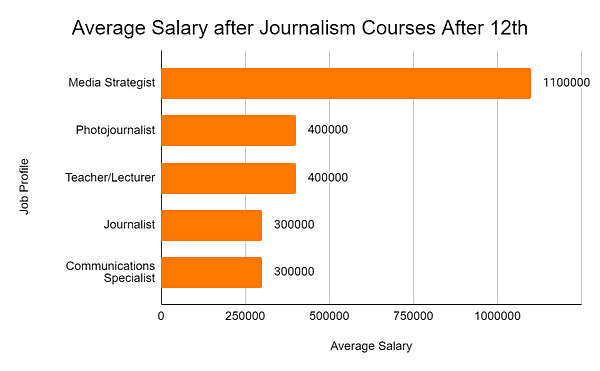
| Job Roles | Job Description | Salary |
| Photojournalist | Their area of work involves capturing, altering, and exhibiting pictures in a storytelling manner so as to publish in various publications or organisations or even on their self publishing establishment. These professionals may earn an average initial salary of INR 4-5 lacs (approx.) which may further increase with an increase in experience and expertise. | INR 4,00,000-INR 5,00,000 |
| Media Strategist | They are responsible for building ad campaigns that are importantly designed for capturing the attention of potential clients and also to maintain the existing customers’ loyalty. They have an in-depth knowledge about the data obtained from surveys, webpage visits, television ratings, etc. | INR 11,00,000 – INr 17,00,000 |
| Journalists | The journalists are responsible for the collection and reporting of important news and events to the news channels or any other related organisation. They may work for news channels, websites, newspapers, magazines, etc. | INR 3,00,000 – INR 5,00,000 |
| Communications Specialist | Their area of work involves the maintenance of the relationship between the public and the organisation in which they presently work. | INR 3,00,000 – INR 6,00,000 |
| Teacher/Lecturer | They are responsible for educating the students admitted to the journalism courses. They may even conduct academic research in the field of journalism and mass communication and publish their findings with the university. | INR 4,00,000 – INR 8,00,000 |