

CAREER IN WRITER/COPYWRITER/EDITOR?
What Does a Copywriter Do?
Copywriters dedicate themselves to attracting readers. Through well-crafted copy, copywriters can help a business sell a product or educate a consumer on a particular subject. They may work for advertising or web content agencies, possibly brainstorming advertising ideas or creating storyboards for visual media, or within companies managing social media accounts or crafting blog posts. Copywriters turn the messages that companies want to express into compelling writing.
Depending on what sort of employment they seek, copywriters can contribute to a wide range of industries. Freelance copywriters work on projects for individual clients, while full-time copywriters are employed by companies or agencies. While some assume that copywriting is restricted to sales material, the reality is quite different. Businesses do use copywriters to create marketing materials, but as content production spreads across various fields, the job has evolved in scope. Copywriters work with publishers, craft reports for consultancies, and write content for websites, among other things.
Using November 2019 data, PayScale reports that copywriters make a median annual salary of around $51,000, with the top 10% of earners making up to $74,000 per year. Projections from the U.S. Bureau of Labor Statistics (BLS) show little or no expected change in the employment of writers between 2018 and 2028, while opportunities for writers with web experience are expected to rise, those in traditional media such as newspapers and periodicals are expected to decline.
What Does a Copy Editor Do?
Copy editors review the text that writers produce to correct errors in grammar, punctuation, and spelling. Additionally, copy editors ensure that content follows style rules put in place by their employer to express an intended tone. Some copy editors are also required to do fact-checking or proofreading. Successful writing should not only be free of errors but should flow smoothly and be consistent in tone and message throughout.
Copy editors sometimes begin their careers as copywriters. In addition to being strong writers, successful copy editors will have strong project and people management skills. Like copywriters, a copy editor may work as a freelancer, or maybe directly employed by a company or agency.
PayScale reports that as of November 2019, copy editors made a median annual salary of around $46,500, with the top 10% of earners making $72,000 annually.
Copywriter vs. Copy Editor: How Do They Differ?
Copywriters use language to get a message across creatively and persuasively. They give an article or piece of advertising copy shape and build a logical argument. Copy editors then correct inaccuracies, discrepancies, and errors, and tune the piece until it is polished and ready for its intended audience.
Copywriting and copy editing are inextricably connected. Copywriters can produce a lot of content in a short space of time, but that content may not hit the mark accurately. Copy editors, due to their experience, can immediately spot where text needs to be tightened or removed altogether. But copy editors also work on many other types of writing as well, including book manuscripts, business reports, and magazine articles. As in all editing professions, copy editors work to ensure the quality of the final product.
What You Need to Enter the Field
Writing may seem like a simple field to excel in, but competition is fierce, and good writing is only part of the formula. Successfully embarking on a career as a copywriter or copy editor requires writing skills such as those gained in specialized degree programs. The Maryville University online Bachelor of Arts in English offers a basis from which a graduate can grow toward being a skilled copywriter or a professional copy editor. Coursework includes:
- Writing Across the Disciplines: Two courses cover how writers can cross disciplines, including both analytical and rhetorical writing.
- Minority Voices in American Literature: This course promotes diversity by educating students about traditionally underrepresented work.
- English Literature: Fiction in all its forms offers insight into the human condition. These courses give students a firm grounding in the classical and contemporary works that shape the world around them.
- Creative Writing: This course teaches students the primary forms and techniques of creative writing.
A degree in English allows students to enhance their knowledge and hone their craft within a supportive environment. After developing these skills in a program like Maryville’s, a career in writing or editing could be the next step.
A Creative Career in Content
Writers and editors use their language skills to communicate and connect with readers of all types. Without the limitations of more traditional careers, freelance writers and copy editors can often define their own working circumstances, gaining freedom from the constraints of time and location. Explore the Maryville University online Bachelor of Arts in English to discover a path to a creative, inspired career.
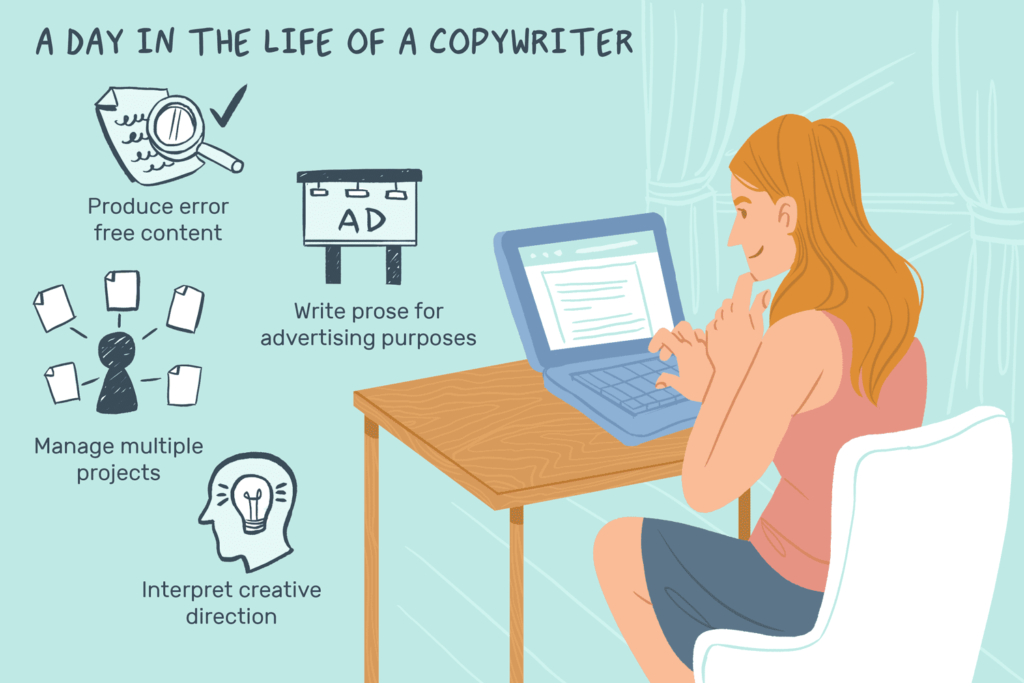
Copywriting is an interesting career option that provides good earning potential and ample opportunities for remote work. Many industries require the service of copywriters and hence, professionals in this field are always in high demand. If you want to become a copywriter, it is important to develop a specific set of skills and train yourself for the job. In this article, we explore how to become a copywriter, discover what these professionals do and what skills they need and share some tips for copywriting.
What do copywriters do?
Copywriters create textual content that satisfies the specific needs of their clients. They may create material for emails, product catalogues, advertisements, blogs, websites or for print media. As a copywriter, you have to communicate with your clients to understand their requirements and the exact purpose of the copy you are writing. A copywriter’s skill lies in creating clear, concise copy that addresses client requirements while attracting the attention of readers. Hence, copywriters require a good understanding of their audience and the market they are writing for.
What do you need to become a copywriter?
To become a copywriter, you require a computer and an internet connection. Agencies usually provide these things along with access to a CMS (Content Management System) that channelises the workflow and enables quality control at multiple levels. In addition to this, copywriters may use a variety of software like word processors, character and word counters, plagiarism checkers and spelling and grammar assistants.
To receive payments, you require a bank account. If you have international clients who pay in a different currency, you need an account that supports international transactions. Most copywriters communicate with their clients through emails, social media or online freelancing platforms. Hence, it is beneficial to have these accounts set up before you apply for jobs.
Skills required for copywriting
Whether you are an agency, corporate or freelance writer, these are some central qualities you need to excel in your career:
Writing skills
The act of writing copy is a recursive process. You do not need to be an accomplished writer to begin, but practising daily can help you refine your writing skills and improve over time.
Attention to detail
You need to be able to evaluate your work from an objective perspective. You need to scan your work for possible errors, looking for correct grammar, spelling and punctuation and proofreading to consistently guarantee quality.
Communication skills
You use these skills to understand others clearly and to be understood completely. They help you assert yourself and position yourself as an authority in writing copy. Listening attentively to your clients, interpreting their vision and writing for their intended purpose all require excellent verbal and written communication skills.
Creativity
Being able to see things from a new perspective is a unique skill. Sometimes, clients may rely on your creativity to make content engaging or appealing to a specific audience. Creativity is also essential for generating ideas for copy, following a client’s instructions.
How to become a copywriter
Follow these steps if you want to become a copywriter:
1. Earn academic qualifications to improve your prospects
To become a copywriter, it is not necessary to have any formal academic qualifications. However, some agencies and clients may insist on hiring candidates who have at least completed their graduation. Since copywriting is a competitive field, employers may prefer hiring candidates who have completed professional courses in marketing, journalism, mass communication or literature.
2. Understand the basics of copywriting
You may consider learning the workflows involved in copywriting before applying to jobs. To be successful in this field, you should have a good understanding of human psychology and the needs of your target readers. Although it is essential to incorporate your individual writing style and creativity, you must give utmost priority to client instructions and requirements.
3. Develop your written communication skills
Copywriters create textual material for specific purposes, following certain standards and guidelines prescribed by their clients. To be able to do this effectively, you may consider putting your written communication skills to practice. This, along with a good reading habit, will help you expand your vocabulary and improve the clarity of your writing.
4. Identify your niche
As a copywriter, you have the option of writing different types of content ranging from advertisements and product descriptions to academic texts and technical documents. It is important to identify the type of writing that you are most interested in pursuing. This vision helps you prepare appropriate writing samples and an effective portfolio.
5. Create a portfolio
Most employers want to see samples of your work to evaluate whether you might be a good fit for the position. Once you have identified your niche, prepare some writing samples that highlight your expertise in that particular domain. Collate your writing samples in the form of a portfolio and attach a well-formatted resume, to present to potential employers and clients.
6. Apply for copywriting jobs
Consider evaluating a client or employer’s requirements and read the job description in detail before you apply for jobs. It is beneficial to update the contents of your portfolio so that it includes work samples that are relevant to the job you are applying for. If you are interested in multiple domains/industries within copywriting, you may consider maintaining separate portfolios to categorise your work samples.
How to become a copywriter with no experience
Even if you lack experience, you can get into the field of copywriting by following these steps:
1. Pursue skill development courses
Platforms like Udemy and Skillshare have online certification courses for copywriting that you can complete at your own pace. These courses and certifications are designed to prepare you for the job and its responsibilities. A certification can highlight your skills to an employer, even if you lack any formal educational qualifications for copywriting.
2. Practise writing and generate work samples
Practising your writing helps you improve your written communication skills and also generate writing samples that you can share with interviewers, potential employers and clients. Pick one or two short writing samples that best highlight your skills and expertise.
3. Use social media platforms to advertise your skills
Many copywriters use social media to advertise their services, gain exposure and get work opportunities. Social media is also a useful tool for networking, as it helps you connect with clients and other professionals in the field.
4. Use online freelancing platforms to find work
Copywriting is largely done on a freelance basis. Online freelancing platforms offer a constant supply of short-term and long-term work opportunities for copywriters. Create and develop an attractive profile and apply for jobs, with relevant work samples.
How hard is it to become a copywriter?
If you have a knack for writing, you can become a copywriter even without any formal education or qualifications. However, copywriting is a competitive field, and you may have to develop specialised knowledge to ensure continued success. This includes an understanding of SEO (Search Engine Optimisation), market localisation techniques and best practices in the industry.
You require basic computer literacy and a good command of the language you write in. You should be able to adapt your writing style to meet the diverse needs of your clients. You also need good marketing skills to find regular work as a freelance copywriter.
How much do copywriters make?
The average base salary of a copywriter is ₹3,02,028 per year. This figure is higher for experienced copywriters who have specialised skills. Copywriting can be done remotely on a freelance basis and pays significantly higher if you work for clients in developed economies.
Tips for copywriting
Here are few tips to improve the effectiveness of your writing:
Set a word limit and write short paragraphs. Keeping information brief and dividing it into sections allows readers to navigate copy effortlessly and retain information.
Write concise and direct sentences. Using an active voice with strong verbs helps the flow of the writing and increases reading fluency for your audience.
Use subheadings. Subheadings help improve readability by making the information visually appealing and easy to scan. This helps the reader find the information they seek quickly and easily.
Include facts. Statistical and quantifiable information makes your writing credible.
Choose fonts with purpose. You want the fonts to be easy to understand and see but to also add an aesthetical appeal to your creation. It should communicate visually what the piece communicates verbally. Every decision a copywriter makes has a purpose and should be working towards an overall and cohesive goal.
Utilise everyday language. Using everyday language is all-inclusive and keeps the information accessible to a vast audience. The more people your copy reaches, the better your client’s interests are served.