
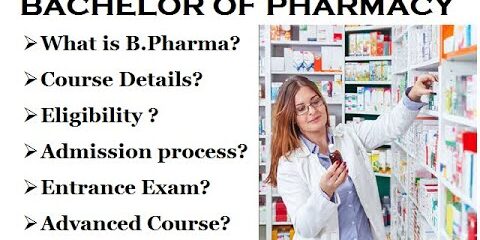
PHARMACY COURSE ?
Role of Pharmacists in Healthcare Industry
The role of a pharmacist does not end here. They study and keep track of all medicines and products with market surveys by connecting with a medical practitioner and distributors for any side effects, reactions, and allergies, etc. Although, before distribution in a market the medicines are tested in labs because of the complexity and diversity of human beings, different outcomes from the same medicine can occur, therefore, a pharmacy practitioner has to research and develop medicines and prescriptions at multitudes. Pharmacy basically includes everything related to your wellness right from the food you consume to the cosmetics, lifestyle products, health, and chemical products that you use.
Looking at the scope of Pharmacy in the healthcare industry, a survey report called ‘Pharmacy at a glance 2015-2017 by International Pharmaceutical Federation (FIP), community pharmacy is the largest contributor with 75.1 percent of registered pharmacists employed followed by hospital pharmacy with 13.2 percent. The services provided by pharmacy practitioners include:
Improving the use of medicines: Reviewing medicines, medicines for hypertension management, directly observed treatments, short courses based medicines, medication reconciliation and new drug development.
Product-focused services: This includes compounding medicines (based on prescriptions by medical practitioners) and assembling expired medicines from a market.
Public health services: This includes promoting health initiatives, vaccinations, health camps, and other health-related awareness.
World Health Organization (WHO) in India is aiming to strengthen the pharmaceutical sector, including drug regulations, volume, and trade, to facilitate the pharmaceuticals in becoming crucial for India’s growth. The WHO in close association with the Government of India controls the strengths and collaborations for improving the pharmaceutical sector.
For making WHO 2030 Sustainable Development agenda a success, access to medicines is a critical factor. Thus, WHO India’s key strategy is to strengthen the Regulatory system that can help access to quality, safe, effective, and inexpensive medical products in an unbiased manner.
Moreover, WHO India is also effectively working on establishing pharmacovigilance systems by integrating public health programmes, promoting rational drug use initiatives for a medical product in accordance with National Action Plan on Antimicrobial Resistance as well as strengthening procurement and supply chain management.
Pharmacy Entrance Tests in India
To enrol in any of the pharma courses, candidates need to fulfill the eligibility criteria, appear and clear respective admission tests of different pharmacy colleges/institutes. The selection procedure includes academic eligibility, valid scores and rank in entrance tests. Here is a list of Pharma entrance exams:
Graduate Pharmacy Aptitude Test (GPAT) | |
Other Pharma Examinations | |
|---|---|
West Bengal Joint Entrance Exam | UPSEE |
GUJCET | Maharashtra State Common Entrance Test |
Karnataka Common Entrance Test | TS EAMCET |
BITSAT | AP EAMCET |
ITM NEST | NIPER Joint Entrance Exam |
Graduate Pharmacy Aptitude Test | Dayananda Sagar University Admission Test |
Central Universities Common Entrance Test | BITS Higher Degree Admission Test |
West Bengal University of Technology Post Graduate Entrance Test | Andhra Pradesh Post-Graduate Common Entrance Test |
GLA University Entrance Test (GLAET) | Uttarakhand State Entrance Exam |
OJEE Post Graduate Admission Test | Integral University Entrance Test |
Jaipur National University Combined Entrance Test | Bharati Vidyapeeth Common Entrance Test |
Goenka Aptitude Test for Admission | DHSG University Post Graduate Entrance Test |
Himachal Pradesh Common Entrance Test | Manipal University Online Entrance Test |
Pharma Skills
While a person pursuing a career in this field will be able to develop core skills and knowledge after pursuing a Pharmacy course and gaining experience with years of practicing, however, they need to have basic skills set. These include:
Communication skills and interpersonal skills | Medicinal and scientific research skills |
Curiosity and persuasive skills | Business skills like marketing, organising |
Technical skills | Sharp memory and knowledge |
Therapeutic and counselling skills | Medical writing and ethics |
Determinant and consistency skills | Adaptation ability to dynamic situations |

Pharma Eligibility Criteria
Pharmacy is offered at different levels and to get admission in any of the Pharma courses, candidates need to fulfill the required eligibility criteria for the particular course. Check below eligibility criteria for Pharmacy courses:
Diploma in Pharmacy (D. Pharm): Candidates should have completed higher secondary education with science subjects i.e. Physics, Chemistry, Biology and Mathematics.
Bachelor in Pharmacy (B. Pharm): Candidates must have completed their higher education from the national- or state-level education board. They must have studied Physics, Chemistry, Mathematics or Biology and English subjects. They must complete 17 years of age on December 31 of the year of admission.
Master of Pharmacy (M. Pharm): Candidates who have completed B. Pharm degree with minimum qualifying marks as required from a pharmacy college as approved by the Pharmacy Council of India (PCI).
For Doctor of Pharmacy (Pharm. D): For a six-year course, candidates must have completed higher education from any state/national education board. They must have studied Physics and Chemistry as compulsory subjects with Mathematics or Biology as additional subjects. They must have completed 17 years of age in the year of admission. Or, candidates holding a diploma in pharmacy are also eligible for Pharm. D course provided they fulfill all other conditions as well.
On the other hand, for three-year course candidates, who have completed the Bachelor of Pharmacy course from an institute recognized under the PCI, are eligible for Pharm. D course. They must have completed higher secondary education or equivalent with Physics, Chemistry, and Mathematics or Biology subjects.
Pharma Syllabus
A student pursuing a Pharma course at UG/PG/Diploma/PhD level will be studying the syllabus including specialised pharma subjects, assignments, projects, industrial training, internship, etc. Moreover, the curriculum of Pharmacy courses also includes communication skills develelopment, environmental science studies, ethical practices and regulations of Pharmacy Council of India. Here we have provided Pharmacy course curriculum at different levels:
Pharmacy Courses | |
|---|---|
Course name | Syllabus |
Diploma in Pharmacy | Pharmaceutics Pharmaceutical Chemistry Pharmacognosy Biochemistry & Clinical Pathology Human Anatomy & Physiology Human Education and Community Pharmacy Pharmacology and Toxicology Pharmaceutical Jurisprudence Drugs Store and Business Management Hospital and Clinical Pharmacy |
Pharm. D | Human Anatomy and Physiology Pharmaceutics Medicinal Biochemistry Pharmaceutical Organic Chemistry Pharmaceutical Inorganic Chemistry Remedial Mathematics/ Biology Pathophysiology Pharmaceutical Microbiology Pharmacognosy & Phyto-pharmaceuticals Pharmacology Community Pharmacy Pharmaco-therapeutics Pharmaceutical Analysis Pharmaceutical Jurisprudence Medicinal Chemistry Pharmaceutical Formulations Hospital Pharmacy Clinical Pharmacy Biostatistics & Research Methodology Biopharmaceutics & Pharmacokinetics Clinical Toxicology Clinical Research Pharmacoepidemiology and Pharmacoeconomics Clinical Pharmacokinetics & Pharmacotherapeutic Drug Monitoring |
B. Pharm | Human Anatomy and Physiology Pharmaceutical Analysis Pharmaceutics Pharmaceutical Inorganic Chemistry Communication skills Remedial Biology/Remedial Mathematics Pharmaceutical Organic Chemistry Biochemistry Pathophysiology Computer Applications in Pharmacy Environmental sciences Physical Pharmaceutics Pharmaceutical Microbiology Pharmaceutical Engineering Medicinal Chemistry Pharmacology Pharmacognosy and Phytochemistry Industrial Pharmacy Pharmaceutical Jurisprudence Herbal Drug Technology Biopharmaceutics and Pharmacokinetics Pharmaceutical Biotechnology Quality Assurance Herbal Drug Technology Instrumental Methods of Analysis Pharmacy Practice Novel Drug Delivery System Biostatistics and Research Methodology Social and Preventive Pharmacy Pharma Marketing Management Pharmaceutical Regulatory Science Pharmacovigilance Quality Control and Standardization of Herbals Computer Aided Drug Design Cell and Molecular Biology Cosmetic Science Experimental Pharmacology Advanced Instrumentation Techniques Dietary Supplements and Nutraceuticals |
Master of Pharmacy in Pharmaceutics
| Modern Pharmaceutical Analytical Techniques Drug Delivery System Modern Pharmaceutics Regulatory Affair Molecular Pharmaceutics (NanoTech and Targeted DDS) Advanced Biopharmaceutics & Pharmacokinetics Computer Aided Drug Delivery System Cosmetic and Cosmeceuticals |
MPharm in Industrial Pharmacy | Modern Pharmaceutical Analytical Techniques Pharmaceutical Formulation Development Novel drug delivery systems Intellectual Property Rights Advanced Biopharmaceutics and Pharmacokinetics Scale up and Technology Transfer Pharmaceutical Production Technology Entrepreneurship Management |
MPharm in Pharmaceutical Chemistry | Modern Pharmaceutical Analytical Techniques Advanced Organic Chemistry Advanced Medicinal chemistry Chemistry of Natural Products Advanced Spectral Analysis Computer Aided Drug Design Pharmaceutical Process Chemistry |
MPharm in Pharmaceutical Analysis | Modern Pharmaceutical Analytical Techniques Advanced Pharmaceutical Analysis Pharmaceutical Validation Food Analysis Advanced Instrumental Analysis Modern Bio-Analytical Techniques Quality Control and Quality Assurance Herbal and Cosmetic Analysis |
MPharm in Pharmaceutical Quality Assurance | Analytical Techniques Quality Management System Quality Control and Quality Assurance Product Development and Technology Transfer Hazards and Safety Management Pharmaceutical Validation Audits and Regulatory Compliance Pharmaceutical Manufacturing Technology |
MPharm in Regulatory Affairs | Good Regulatory Practices Documentation and Regulatory Writing Clinical Research Regulations Regulations and Legislation for Drugs & Cosmetics, Medical Devices, Biologicals & Herbals, and Food & Nutraceuticals In India and Intellectual Property Rights Regulatory Aspects of Drugs & Cosmetics Regulatory Aspects of Herbal & Biologicals Regulatory Aspects of Medical Devices Regulatory Aspects of Food & Nutraceuticals |
MPharm in Pharmaceutical Biotechnology | Modern Pharmaceutical Analytical Techniques Microbial and Cellular Biology Bioprocess Engineering and Technology Advanced Pharmaceutical Biotechnology Proteins and protein Formulation Immuno-technology Bioinformatics and Computer Technology Biological Evaluation of Drug Therapy |
MPharm in Pharmacy Practice | Clinical Pharmacy Practice Pharmaco-therapeutics Hospital & Community Pharmacy Clinical Research Principles of Quality Use of Medicines Clinical Pharmacokinetics and Therapeutic Drug Monitoring Pharmaco-epidemiology & Pharmaco-economics |
MPharm in Pharmacology | Modern Pharmaceutical Analytical Techniques Advanced Pharmacology Pharmacological and Toxicological Screening Methods Cellular and Molecular Pharmacology Principles of Drug Discovery Experimental Pharmacology practical |
MPharm in Pharmacognosy | Modern Pharmaceutical Analytical Techniques Advanced Pharmacognosy Phytochemistry Industrial Pharmacognostical Technology Medicinal Plant biotechnology Indian system of medicine Herbal cosmetics |
Pharma Job Profiles
Pharmacist: A pharmacist is usually associated with healthcare centres, individual medical practitioners, hospitals, and every medical association. Their responsibilities include advising medical practitioners in the healthcare industry i.e. doctors, nurses, medical technicians about drugs and their uses, dosage as well as side effects. They also check for safety standards of new medicines developed, advise on medicines with suitable diets, dosages, prescription or no prescription drugs as well as suggest the most appropriate form of medications such as tablets, vaccinations, drops, ointments, liquid syrups, inhalers etc. The sales, marketing, and distribution of medicines are also managed by pharmacists.
Pharmacologist: A person holding a degree in Pharmacology specialisation works in the research and development of Drugs for Pharmacy Industry. A Pharmacologist study observes and alters the drugs developed as per the standards of Pharmacy Regulations. They majorly work in cardiovascular pharmacology, Neuropharmacology, psychopharmacology, Clinical Pharmacology, safety pharmacology, Toxicology, and more.
Food and cosmetic products development scientist: A pharmacy degree holder is not just restricted to preparing drugs but also, they are involved in researching and developing products beyond medicines such as cosmetics and food. There are people who are allergic to a certain food such as gluten allergy, lactose intolerance, etc. and on the consumption of such foods, they develop serious allergies, therefore, a pharmacy scientist researches to develop food free from these allergic elements. In a similar way, they help develop harmless and non-allergic cosmetic products. For a scientist, a laboratory is a workplace, most of the time is invested in writing about research carried out by them along with the right instructions. All the how-to-use instructions, best before/expiry dates, ingredients, and any specific notes you find on medicines, cosmetics, and food products is a scientists’ work. They send the guidelines/instructions after lab testing as per the standards set by the regulatory authorities to the manufacturing units.
Clinical Trial Research Associate: This role is relatively crucial because as an associate in Clinical Trial Research, the collection of data in research studies, interpret it as well as document the research. Moreover, the CTR Associate is responsible to verify the vaccinations, medicines, medical devices, and other clinical monitoring tools. They are involved in ensuring that protocols are followed, regulations are considered as well as authenticating the CRT data and information. The CRT associates manage the clinical studies for diseases, diagnostics, and monitoring the clinical study labs as well as risk management in clinical trials.
Pharmacy Top Recruiters
Indian Recruiters | International Recruiters |
|---|---|
|
|
Pharmacy: Frequently Asked Questions
Q: Being a Pharmacist (B. Pharm), how will the post-graduation specialization in Pharmaceutics help me shape my career?
Q: Can I pursue BPharm through correspondence?
Q: Do I have to appear for GPAT for admission in BPharm?
Q: What are the best course options after BPharm?
Q: Is there any specialization or specialized programme for BPharm?
Q: Which are the top Pharmacy entrance exams in in India?
Q: What are the eligibility criteria for BPharm and DPharm?
Q: How can I get admission to the BPharm course?
Q: Do I need to appear for an entrance exam for BPharm?
Q: What is the duration of the BPharm course?
Q: I got only 50% in the B. Pharm course but scored very good marks on GPAT. How will it be beneficial for me?
- Master of Pharmacy – MPharm Pharmaceutics
- Master of Pharmacy – MPharm Pharmacology
- Master of Pharmacy – MPharm Pharmaceutical Chemistry
- Master of Pharmacy – MPharm Pharmaceutical Analysis
Q: What does a Pharmacist do on a daily basis?
Q: Can I pursue a course in Pharmacy after completing class 12? What courses can I choose from?
Q: What type of career aspects I can expect after completing any programme in Pharmacy?
- Pharmacist
- Medical representative
- Scientist (Research field)
- Teacher (Junior Lecturer)
- Quality Control Officer
- Clinical Research professional
- Drug Inspector
- Marketing professional